
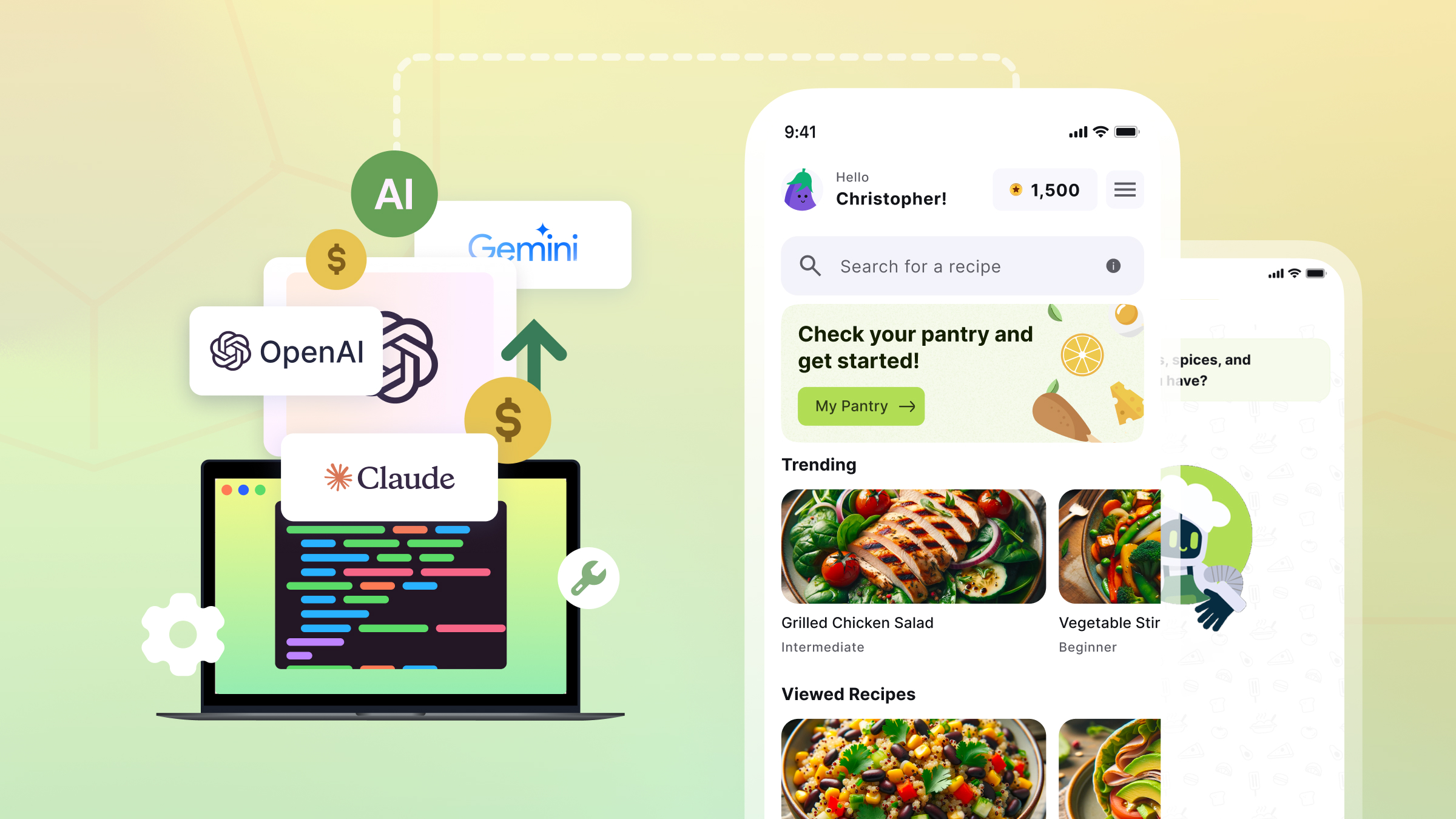

Lessons from Building CoChefy in the Age of AI

When we started building CoChefy, we knew we were entering a new era of product development.
AI is no longer experimental. It’s expected.
But building a real product on top of evolving AI systems comes with challenges that don’t show up in demos.
This final post in our CoChefy series isn’t about architecture details or animation workflows.
It’s about what it actually means to build a startup with LLMs in 2026.
Developing with AI: Costs, Models, and Tradeoffs
One of the first realities of building with AI is this:
AI isn’t free. And it’s not stable.
Every decision has a cost component:
- Which model to use?
- What context size do you need?
- How often are you calling it?
- Can you reduce unnecessary tokens?
- Are you optimizing for quality or for efficiency?
In the early days of a product, revenue doesn’t usually offset AI costs, that forces discipline.
You can’t just throw the largest model at every request, you need to be intentional.
And you need to architect your system so that:
- AI calls are purposeful
- Outputs are reused when possible
- Costs scale with growth, not before it
AI isn’t just a technical choice, it’s a financial one.
The Reality of AI in Production
There’s a difference between using AI in a prototype and using AI in production.
In production, you deal with:
- Token limits
- Latency
- Model deprecations
- Sudden performance shifts
- Provider outages
- New models replacing old ones overnight
You can wake up to a “smarter” model that behaves differently.
Or a model that suddenly becomes more constrained.
This forces product teams to think differently.
You’re not just integrating a library.
You’re building on a moving foundation.
The key lesson?
Build your product so AI is replaceable.
Your product logic should survive model changes.
Your experience shouldn’t collapse because a provider updates weights.
AI should be powerful — but never irreplaceable.
Revenue from Day One (and Why It Matters)
Another important decision we made early on:
CoChefy would not be a pure cost center.
From launch, we integrated advertising as a monetization layer.
Why?
Because AI costs compound.
If you’re building a consumer AI product without revenue, you’re burning twice:
- Development costs
- Inference costs
Even modest revenue offsets infrastructure pressure and gives breathing room to experiment.
Monetization doesn’t need to be aggressive, but it needs to exist.
Building with AI forces you to think about business fundamentals earlier than many startups expect.
Cutting Costs Without Cutting Experience
As traction grows (or doesn’t), you constantly evaluate:
- Model efficiency
- Frequency of AI calls
- Infrastructure overhead
- Caching opportunities
- Feature prioritization
Sometimes innovation isn’t about adding more AI, it’s about deciding where not to use it.
That discipline keeps the product sustainable.
The Future of CoChefy
We’re fully live now.
If you’d like to try CoChefy yourself, you can download the iOS or Android versions from our website: https://www.cochefyapp.com
CoChefy is in the hands of users, and we’re watching carefully:
- How they cook
- What they generate
- What they ignore
- What they repeat
If traction increases, there’s a lot we want to explore:
- New ways of cooking assistance
- Smarter kitchen workflows
- AI agents that guide entire meal plans
- Better tracking of food usage
- Systems to reduce waste more intelligently
The goal isn’t to add more AI for the sake of it.
It’s to build tools that genuinely help people cook better, waste less, and feel more confident in their kitchen.
AI is a tool, the mission is the product.
Final Thoughts: Building with AI Requires Fundamentals
If this series taught us anything, it’s this:
Building with AI doesn’t replace fundamentals, it amplifies them.
You still need:
- Clear architecture
- Strong product thinking
- Cost awareness
- Documentation
- Discipline
- Real users
AI makes building faster.
But it doesn’t make building easier.
And that’s the real lesson from CoChefy.
CoChefy Blog Series Index
This article concludes our CoChefy series:
1. From Idea to MVP: Designing CoChefy
2. Feature Focus: Turning Your Pantry into a Recipe Generator
3. Feature Focus: The Daily Cooking Game
4. Building an AI-Powered App with Ruby on Rails and DigitalOcean
5. Lessons from Building CoChefy in the Age of AI (this post)
Together, these posts document the journey from concept to launch — covering design, architecture, AI integration, animation systems, and real-world startup lessons.